

How Vibration Affects Gas Chromatography in DGA
25
May
May
1. Disturbance of Carrier Gas Flow Stability
Gas chromatography depends on a stable, laminar carrier gas flow (e.g., helium, nitrogen).
Effect of vibration:
- Induces pressure fluctuations in flow controllers and regulators
- Causes micro-pulsations in carrier gas flow
- Disrupts steady-state gas velocity through the column
Impact:
- Changes retention time of gases
- Broadens or shifts peaks in chromatograms
- Reduces repeatability and accuracy of gas concentration measurement
2. Column Performance Degradation
The GC column (capillary or packed column) is where gas separation occurs based on interaction with stationary phase.
Effect of vibration:
- Causes mechanical stress or micro-bending of columns
- Leads to uneven distribution of stationary phase
- Induces turbulence instead of ideal laminar flow
Impact:
- Poor separation efficiency (reduced resolution between gases)
- Peak overlap (e.g., H₂, CH₄, C₂H₂ separation degraded)
- Incorrect gas identification or quantification
3. Detector Signal Noise and Instability
DGA systems typically use detectors like:
- Thermal Conductivity Detector (TCD)
- Flame Ionization Detector (FID)
Effect of vibration:
- Mechanical movement introduces electrical noise in detector signals
- Instability in flame (for FID) or thermal baseline (for TCD)
- Drift in baseline signal over time
Impact:
- Reduced signal-to-noise ratio
- Difficulty detecting trace gases (ppm-level)
- False peaks or masking of real gas signals
4. Valve and Sampling System Disruption
GC in DGA uses:
- Injection valves (e.g., sampling loops)
- Switching valves for gas routing
Effect of vibration:
- Causes improper valve seating or timing errors
- Leads to inconsistent sample injection volumes
- Can create micro-leakage at fittings
Impact:
- Variation in measured concentration
- Poor repeatability between runs
- Potential contamination or dilution of samples
5. Sample Integrity Issues
DGA requires precise extraction and delivery of dissolved gases from transformer oil.
Effect of vibration:
- Promotes bubble formation or gas segregation in lines
- Causes mixing inconsistency in extracted samples
- Agitates oil-gas equilibrium during extraction
Impact:
- Non-representative gas samples
- Fluctuating readings unrelated to actual transformer condition
- Misleading diagnostic interpretation
6. Calibration Drift
GC systems require periodic calibration using known gas mixtures.
Effect of vibration:
- Alters flow and detector stability during calibration
- Introduces systematic error in calibration curves
Impact:
- Long-term drift in measurement accuracy
- Inconsistent trending of gas concentrations
- Reduced confidence in fault diagnosis
7. Mechanical Fatigue and Long-Term Reliability
Effect of prolonged vibration:
- Loosening of fittings and connections
- Wear in pumps, regulators, and valve actuators
- Fatigue damage to delicate components
Impact:
- Increased maintenance frequency
- Unexpected system failures
- Loss of continuous monitoring capability
Summary of Impact on DGA Analysis
Key Takeaway
Gas chromatography in DGA relies on precision, stability, and repeatability. Vibration compromises all three by:
- Distorting gas separation physics
- Introducing measurement noise
- Affecting sample consistency
This directly leads to:
- Reduced accuracy
- Poor trend reliability
- Higher risk of false alarms or missed transformer faults
Watch the YouTube Video to Learn more:
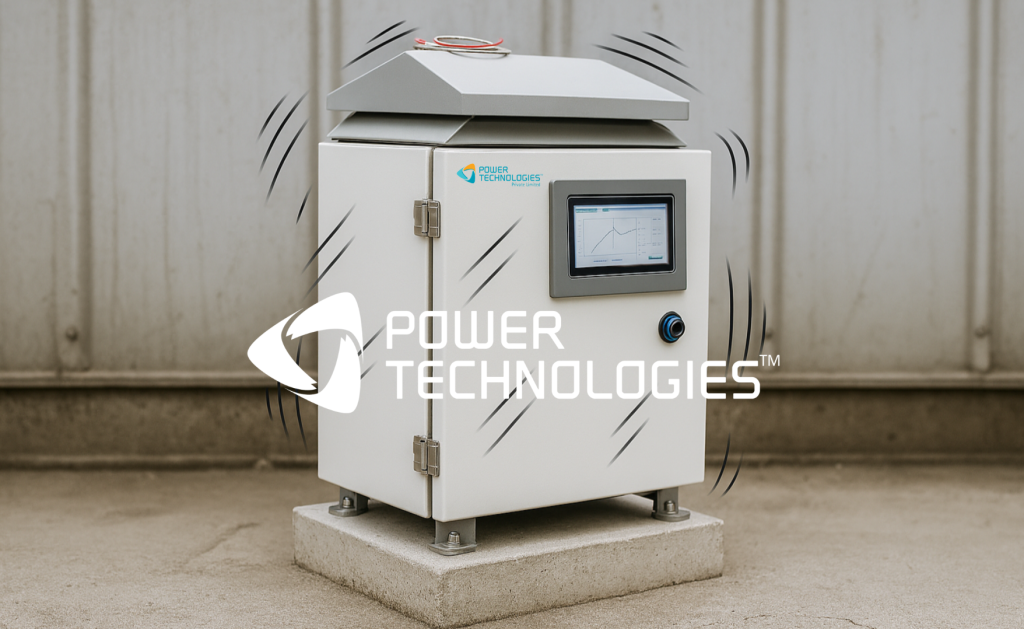
PTDGA5 iDGA SESIMIC Vibration Simulation Video
