

Electrical Substations – Rethinking Electrical Safety in High Power Density Containerized Substations
Jun
AI factories and data centers are advancing rapidly—and power infrastructure must keep pace.
To meet aggressive timelines and increasing power density demands, the industry is rapidly adopting high‑power skids, modular power systems, and containerized substations as plug‑and‑play solutions. These systems integrate medium-voltage (MV) switchgear, dry-type transformers, and low-voltage (LV) switchgear within a compact footprint—making them ideal for rapid deployment.
However, a critical question is often overlooked:
How can thermography and partial discharge (PD) inspections be performed safely in enclosed, energized systems while maintaining compliance with ANSI, NETA, IEEE 2969, NFPA 70B, and NFPA 70E?
NFPA 70B – Continuous Thermal Monitoring (CTM)
Recognition of CTM as an Alternative
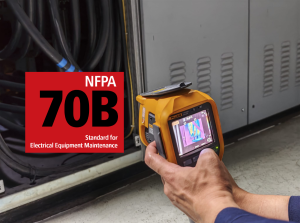
NFPA 70B Section 7.4.5 now allows the use of permanently installed temperature sensors as an alternative to traditional infrared (IR) thermography.
These sensors can be installed in equipment such as:
- Switchgear (1 kV to 52 kV)
- Motor Control Centers (MCCs)
- Switchboards
- Busways
EN 50110-1 encourages a risk-based, adaptive maintenance strategy, where tools such as thermal monitoring are recommended (though not mandatory) to enhance safety and reliability.
IEEE 2969 (2025/2026) further supports this shift, stating that continuous thermal monitoring can complement or replace traditional IR thermographic surveys.
Limitations of Infrared Thermography
- Requires physical access to energized equipment
- Involves removal of covers and manual inspection
- Exposes workers to arc flash and electrical shock hazards
- Relies heavily on administrative controls and PPE (lower-level risk controls)
- Conducted at scheduled intervals, often under limited load conditions
- May miss intermittent, transient, or load-dependent faults
Advantages of Continuous Thermal Monitoring (CTM)
- Provides real-time, 24/7 temperature monitoring
- Detects early-stage faults and evolving conditions
- Enables continuous tracking without operational interruption
- Eliminates the need for routine interaction with energized equipment
Safety Improvements
- Reduces or eliminates worker exposure to electrical hazards
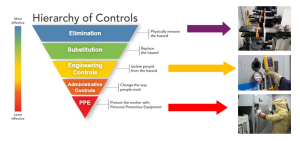
- Shifts risk mitigation to higher levels in the hierarchy:
- Hazard elimination
- Engineering controls
- Minimizes reliance on procedural safeguards and PPE
Operational & Maintenance Benefits
- Supports predictive and condition-based maintenance
- Enables data-driven decision-making
- Allows maintenance to be scheduled proactively based on equipment condition rather than fixed intervals
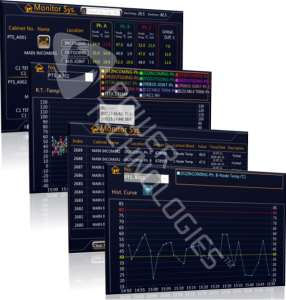
Overall Impact
Continuous thermal monitoring represents a transition from manual, exposure-based inspections to automated, safer, and continuous monitoring—enhancing both safety and reliability of electrical systems.
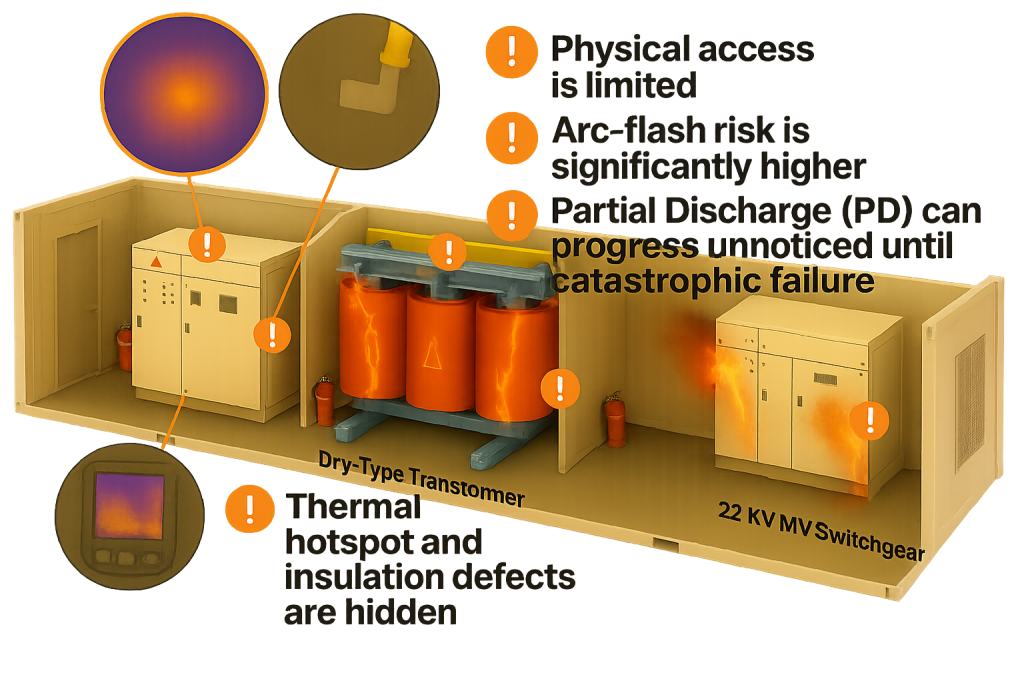
Challenges in Containerized Substations
- ❗ Limited physical access
- ❗ Increased arc flash risk
- ❗ Hidden thermal hotspots and insulation defects
- ❗ Partial discharge (PD) may progress unnoticed until catastrophic failure
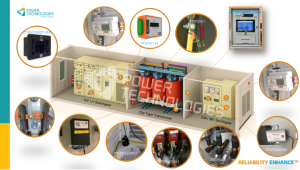
The real risk isn’t what we can see—it’s what we can’t.
The Shift to Continuous Asset Diagnostics
The industry must move beyond periodic thermographic inspections toward continuous asset diagnostic systems (CADs).
By deploying continuous monitoring technologies—including:
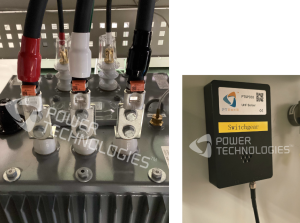
- Temperature sensors
- Fume detection
- Partial discharge sensors (UHF, HFCT, TEV)
- Environmental monitoring
across LV switchboards, MV switchgear, transformers (dry-type or oil-filled), UPS systems, and bus ducts—operators gain 24/7 visibility without opening live equipment.
Integration with Digital Platforms
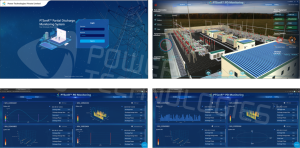
When integrated with SCADA, DCIM, and BMS/EPMS systems, this approach enables true data-driven operations:
✅ Early warning detection
✅ Predictive maintenance
✅ Improved personnel safety
✅ Higher system uptime
Summary
At a global level, there is no single universal regulation mandating thermographic inspections or continuous thermal monitoring across all electrical systems. However, leading industry standards are evolving significantly in this direction.
NFPA 70B (2026), now an enforceable standard for electrical equipment maintenance, requires structured maintenance programs and formally recognizes continuous thermal monitoring (CTM) as an acceptable alternative to periodic infrared inspections.
In parallel, the emerging IEEE 2969 (2025/2026) guide reinforces this transition by providing detailed technical guidance on continuous thermal monitoring systems. It explicitly supports CTM as a method that can complement or replace traditional thermographic inspections, enabling more advanced, data-driven maintenance strategies.
As a result, thermal inspections—particularly in mission-critical environments such as hospitals, data centers, and industrial facilities—have become a de facto requirement in modern maintenance practices. These inspections play a key role in identifying abnormal heat signatures associated with loose connections, deteriorating components, and developing faults.
However, periodic thermographic inspections are inherently limited by their intermittent nature. Both NFPA and IEEE now promote a transition toward continuous, condition-based monitoring approaches.
Continuous thermal monitoring provides real-time visibility into equipment condition, enabling early fault detection before failures occur.
This shift—from periodic inspections to continuous monitoring—marks a fundamental evolution from reactive or time-based maintenance to predictive, risk-based asset management.
By continuously assessing thermal conditions, organizations can significantly reduce the risks of:
- Equipment failure
- Arc flash incidents
- Fire hazards
- Unplanned downtime
while improving operational reliability and personnel safety.
“Future-ready containerized substations aren’t just built fast—they’re designed to be continuously monitored.”
