

Revolutionizing Transformer Reliability: AI-Driven Partial Discharge Monitoring with PTSDTX™

Aug
Executive Summary
Partial discharge (PD) is a critical early indicator of insulation degradation in dry-type transformers. Left undetected, PD can lead to catastrophic failures, costly downtime, and compromised safety. The PTSDTX™ system from Power Technologies™ offers a comprehensive, AI-driven solution for real-time PD monitoring, combining advanced sensor technology, predictive analytics, and intuitive software to safeguard transformer health and extend operational life.
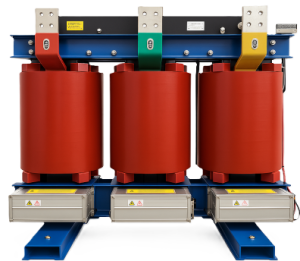
- Introduction: The Challenge of Partial Discharge in Dry-Type Transformers
Dry-type transformers are essential components in modern power systems, especially in environments where fire safety and environmental resilience are paramount. However, long-term operation leads to insulation aging, which manifests as partial discharge – localized electrical discharges that do not completely bridge the insulation between conductors.
Types of Partial Discharge:
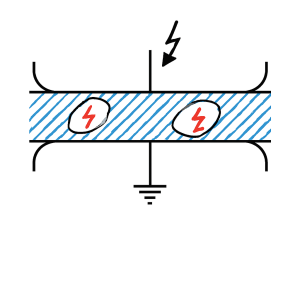
- Internal Discharge: Occurs within solid insulation due to defects, voids, or cavities that trap electric fields.
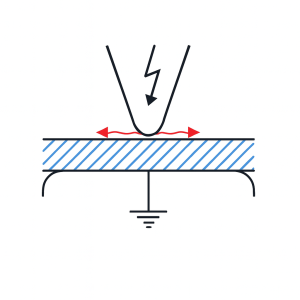
- Surface Discharge: Develops along the surface of insulating materials, often triggered by contamination or moisture.
- Contact Discharge: Arises when floating conductive elements are exposed to high electric field conditions, leading to localized breakdown.
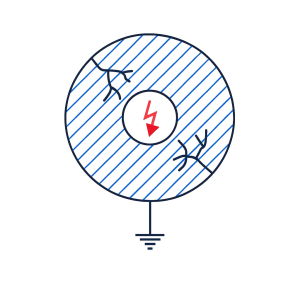
- Corona Discharge: Happens in gaseous dielectrics under inhomogeneous electric fields, typically around sharp edges or points, producing ionization without complete breakdown.
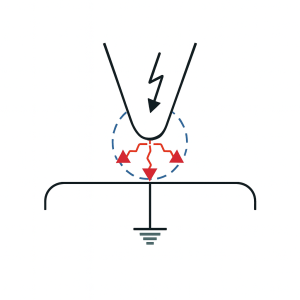
These discharges, though initially weak, accelerate insulation deterioration and can trigger severe short-circuit failures if not addressed proactively.
- Monitoring Methodology: AI-Enhanced Detection and Diagnosis
The PTSDTX™ system employs a multi-sensor, AI-powered approach to detect and analyze PD activity with high precision. Unlike traditional methods (pulse current, gas chromatography), PTSDTX™ leverages Ultra High Frequency (UHF) detection for superior noise immunity and broader data capture.
Key Monitoring Technologies:
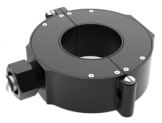
- HFCT Sensor (PTSPD32)
Mounted on the iron core ground wire, offering high sensitivity and low-frequency noise filtering.
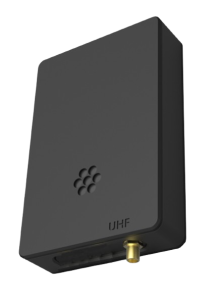
- UHF Sensor (PTSPD33)
Non-intrusive magnetic installation with IP65-rated durability, ideal for dusty or wet environments.
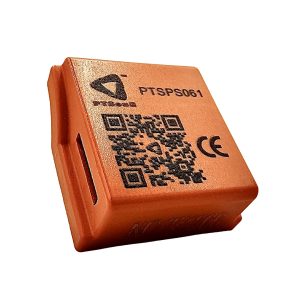
- Self-Powered Wireless Temperature Sensor (PTSPS061)
Wireless Portal-based, battery-free monitoring for isolated high-voltage zones.
- System Architecture and Components
The PTSDTX™ system is modular, scalable, and designed for seamless integration into existing infrastructure. It includes:
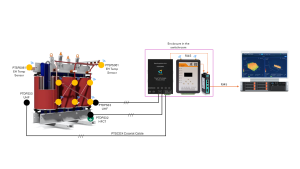
| S.no. | Component | Function |
| 1 | PTSPS30PD DAU | Multi-channel data acquisition with built-in alarms and AI-driven risk analysis |
| 2 | PTSPD32 HFCT Sensor | High-frequency PD detection with clamp-on design |
| 3 | PTSPD33 UHF Sensor | Internal PD detection with strong noise immunity |
| 4 | PTSPS061 Temp Sensor | Wireless, maintenance-free temperature monitoring |
| 5 | PTSP1807 Gateway | Multi-interface communication (RS485, fiber, Ethernet) |
| 6 | VizionEye™ Software | Real-time visualization, trend analysis, and automated reporting |
- AI-Powered Analytics and Visualization
The PTSDTX™ system integrates advanced algorithms—neural networks, genetic algorithms, and fuzzy logic—to classify PD events and predict insulation breakdown.
Software Capabilities:
- Real-time data display in 2D/3D formats (PRPD, PRPS)
- Automated event classification and alarm generation
- Historical trend graphs (daily/weekly/monthly)
- Remote access via PC/LAN and IEC61850 network compatibility
- Customizable early warning thresholds and storage settings
Images of Vision Eye
- Applications and Deployment
PTSDTX™ has been successfully deployed across critical sectors including:
- Chemical Processing Plants
- Electronic Manufacturing Facilities
- Wind Farms and Renewable Energy Sites
Its non-intrusive design and robust encapsulation (IP65/IP68) make it ideal for both indoor and outdoor installations, whether retrofitted or newly commissioned.
- Benefits and Impact
✅ Operational Reliability
Continuous monitoring minimizes unexpected failures and supports proactive maintenance.
✅ Cost Efficiency
Data-driven insights reduce unnecessary servicing and optimize asset management.
✅ Safety and Compliance
Early fault detection enhances safety and supports regulatory compliance.
- Conclusion
The PTSDTX™ Dry Transformer AI Partial Discharge Monitoring Solution represents a leap forward in transformer diagnostics. By combining cutting-edge sensor technology with intelligent software, it empowers operators to detect, diagnose, and prevent insulation failures before they escalate—ensuring safer, more reliable power systems.
🔍 More to Explore: From smart transformers to predictive diagnostics, our portfolio continues to grow- each solution designed to meet evolving industry needs. Discover the latest in power technologies and monitoring tools that bring intelligence, safety, and reliability to your operations.
📬 Ready to learn more?
Browse our full range of products or contact us for tailored recommendations and support.
